- Professional Risks Insurance
- Private Clients
- Farms & Estates
- Commercial Clients
- Wholesale Insurance Broking
- Claims
- About
- Contact
- Log in

Log in

About us
Latest Insurance News
8.04.26
Electrical Installation Condition Reports (EICR)
Could Your Insurance Be at Risk?
If you own a property that is let under a full repairing lease, it may be tempting to assume that the tenant is responsible for everything relating to the building’s condition. However, when it comes to insurance requirements, landlords can still carry important responsibilities. One increasingly common requirement is ensuring that a valid Electrical Installation Condition Report (EICR) is in place – and failing to do so could potentially put your insurance cover at risk.
While a full repairing lease may place responsibility for maintenance and repairs on the tenant, landlords often remain responsible for arranging and maintaining the building insurance. This means that even if the tenant manages the day-to-day condition of the property, the landlord still has an important role in ensuring the property meets the insurer’s requirements.
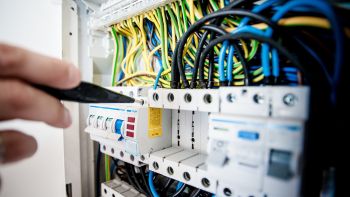
One important document that landlords should ensure is in place is the Electrical Installation Condition Report (EICR). This report provides a formal assessment of the electrical installation within a building and highlights whether any remedial work is required.
Why an EICR Matters for Landlords and Property Insurance
An Electrical Installation Condition Report is carried out by a qualified electrician and involves testing and inspecting the electrical systems within a property. The aim is to confirm that the installation is safe for continued use and complies with recognised safety standards.
Electrical inspections carried out as part of an EICR assess whether the installation meets the safety standards set out in BS 7671 – IET Wiring Regulations, which is the recognised benchmark for electrical installations in the United Kingdom.
In many commercial property insurance policies, insurers now expect landlords to hold an up-to-date EICR. These reports are typically required every three to five years, although the exact timeframe may vary depending on the type of building or the findings of the previous inspection. Where faults or potential hazards are identified, the report will recommend remedial works and may specify a timeframe for completion.
From an insurer’s perspective, electrical faults remain one of the most common causes of property fires. As a result, maintaining a valid EICR has become an increasingly important risk management requirement for many landlords.
What Landlords Should Do to Stay Compliant
Insurance companies will make it clear that the policy contract is between you and the insurer, not your tenant. Therefore, if keeping an up-to-date EICR is a condition of your policy, you need to ensure this requirement is met.
We suggest that you arrange the inspection to ensure that the work is carried out. However, if you decide to ask your tenant to arrange the inspection (which may also be required under their own business insurance), they should provide you with a copy of the report and you should follow up regularly until it is completed. It is important to make clear that this requirement is necessary in order to maintain valid insurance cover.
Landlords should also keep copies of inspection reports on file and make a note of the next inspection date so that the report does not inadvertently expire.
Could Your Insurance Claim Be Declined?
Failing to comply with EICR requirements could have serious consequences if a claim arises. In the event of a fire or other incident caused by an electrical fault, insurers may investigate whether the policy conditions have been met.
If your insurance policy required an up-to-date Electrical Installation Condition Report and one was not in place, the insurer may have grounds to decline the claim.
Across the insurance industry there are increasing reports of claims being rejected because landlords either failed to obtain an EICR or allowed an existing report to become outdated. The financial consequences could be severe. A major fire could result in the loss of an entire building, potentially leaving the landlord responsible for substantial rebuilding costs, as well as the loss of rental income if the tenant is unable to return to the property.
Protecting Your Property and Insurance Cover
For this reason, landlords should take a proactive approach to risk management and policy compliance. Ensuring that important safety documentation such as Electrical Installation Condition Reports remains current is a relatively simple step that can help protect both the property and the insurance cover in place.
If you would like Cox Mahon to review your current insurance policies to ensure you are properly protected, please contact us.
Information provided by Harrison Law, (Cert CII) Head of Commercial & Private Clients, Cox Mahon Ltd.
Request More Information Form
Complete the details below and we will contact shortly.