- Professional Risks Insurance
- Private Clients
- Farms & Estates
- Commercial Clients
- Wholesale Insurance Broking
- Claims
- About
- Contact
- Log in

Log in

About us
Latest Insurance News
11.06.26
Why some insurers hesitate to cover homes with biomass boilers
Why a standard policy may not be enough
As more homeowners move towards environmentally friendly heating options, biomass boilers have become increasingly popular. While they offer a sustainable alternative to oil or gas, many property owners are surprised to encounter difficulties when arranging insurance. In some cases, insurers may be cautious or even decline cover entirely.
This isn’t a reflection of opposition to green energy. Instead, it comes down to how insurers assess risk. From their perspective, biomass systems present a very different risk profile compared to conventional heating systems.
What concerns insurers?
Greater potential for fire
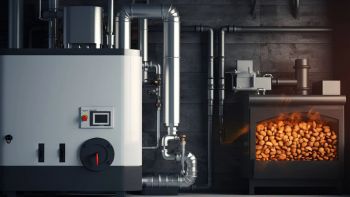
Biomass boilers rely on burning organic materials such as logs, pellets, or wood chips. Unlike sealed gas or oil systems, they involve visible combustion and on-site fuel storage.
This introduces additional fire-related risks, including sparks, embers, and the presence of combustible materials. Even when a system is correctly installed, the act of storing and burning solid fuel increases the overall risk compared to modern gas systems, which are closed and tightly controlled.
Challenges with fuel storage
A key part of any biomass system is the storage of fuel, which is often kept either inside the property or nearby.
Insurers tend to be cautious when:
- Fuel is stored close to the building, making it easier for a fire to spread
- Storage areas are not purpose-built or use materials that could worsen a fire
- Poor ventilation or damp conditions increase the risk of mould or, in rare cases, self-heating and combustion in large fuel piles
While some of these scenarios are uncommon, they still add complexity when insurers assess potential exposure.
Inconsistent installation standards
Unlike gas boilers, which are subject to well-established and widely enforced regulations, biomass systems vary more in design and installation quality.
Common concerns include:
- Lack of HETAS (or equivalent) certification
- Bespoke or non-standard system designs
- Missing or incomplete documentation
- Older installations from early incentive schemes that may not meet current expectations
This lack of consistency can make it harder for insurers to properly evaluate the risk.
Ongoing maintenance demands
Biomass boilers typically require more regular upkeep than conventional heating systems. This includes clearing ash, maintaining combustion chambers, and checking flues or chimneys.
If maintenance is neglected, the likelihood of issues such as fire, smoke damage, or breakdown increases. Insurers therefore factor in the risk that maintenance standards may vary over time.
Repairs can be complicated and costly
In the event of a claim, repairing or replacing a biomass system can be more involved than dealing with standard boilers. Specialist engineers and replacement parts are not always easily available.
This can lead to higher costs and longer repair times, which in turn increases the potential size of a claim from an insurer’s perspective.
Limited historical data
Compared with gas or oil systems, biomass heating remains relatively niche. This means insurers have less long-term claims data to draw on when pricing and underwriting policies.
Where there is uncertainty, insurers tend to be more cautious—either by increasing premiums or declining to offer cover.
How homeowners can improve their chances of getting cover
If you already have a biomass system, or are planning to install one, there are ways to make your property more attractive to insurers:
- Use qualified installers with HETAS (or equivalent) certification
- Keep detailed records of servicing and maintenance
- Store fuel in a properly designed and fire-safe structure
- Position fuel stores at a safe distance from the main building where possible
- Install appropriate fire detection, such as smoke and heat alarms, in key areas
- Speak to a broker experienced in specialist or non-standard risks
How Cox Mahon can support you
With specialist knowledge of biomass systems, associated risks, and current installation standards, Cox Mahon can present your property to insurers in the best possible light. This helps secure appropriate cover at a competitive price—while also reducing the likelihood of complications if you ever need to make a claim.
Information provided by Harrison Law, (Cert CII) Head of Commercial & Private Clients, Cox Mahon Ltd.
Request More Information Form
Complete the details below and we will contact shortly.